/smstreet/media/agency_attachments/3LWGA69AjH55EG7xRGSA.png)

/smstreet/media/member_avatars/5rpIMyEDmI3hc1HGJLfT.png )
 Follow Us
/smstreet/media/media_files/2026/02/17/faiz-askari-editorial-on-ai-2026-02-17-23-23-41.png)
Opportunities, Roadblocks, and The Policy Path to Digital Leadership
Artificial Intelligence is emerging as the defining technology of the 21st century. For India, the next five years will determine whether it remains primarily a services-driven digital economy or evolves into a global AI innovation powerhouse.
Political leaders, policymakers, and global tech executives are increasingly aligning around the belief that India’s digital foundations give it a unique advantage in the AI era.
Prime Minister Narendra Modi has repeatedly emphasized this transformation, stating:
“India is not only a consumer of technology but a global leader in technology. Our digital public infrastructure is an example for the world.”
This confidence reflects India’s rapid rise in digital adoption, startup creation, and AI-driven services.
AI as the Next Engine of India’s Global Influence
Over the next five years, AI will drive India’s global impact across several strategic dimensions.
Exporting AI-Driven Services
India’s IT sectoris transitioning from traditional outsourcing to AI-powered solutions.
Microsoft CEO Satya Nadella has highlighted India’s importance in the global AI ecosystem:
“India has one of the world’s most vibrant developer communities. The next wave of AI innovation will be built by developers everywhere, including in India.”
Similarly, Alphabet CEO Sundar Pichai has noted:
“India is one of the most exciting markets for AI, not just because of its scale, but because of the ingenuity of its developers and entrepreneurs.”
These statements reflect a growing global consensus that India will play a central role in AI deployment and innovation.
Digital Public Infrastructure as a Global Model
India’s digital stack—Aadhaar, UPI, and digital governance platforms—has created a blueprint for inclusive digital transformation.
Finance Minister Nirmala Sitharaman has described this transformation as foundational to economic growth:
“Digital public infrastructure has transformed the delivery of services, improved transparency, and empowered millions of citizens and entrepreneurs.”
AI integration into these platforms could:
Improve fraud detection
Enable personalized services
Strengthen financial inclusion
AI-Enabled Manufacturing and Supply Chains
India’s push toward smart manufacturing is expected to accelerate with AI.
Reliance Industries Chairman Mukesh Ambani has emphasized the strategic importance of technology:
“Artificial intelligence, robotics, and data analytics will redefine industries. India must lead in building and deploying these technologies at scale.”
AI-driven manufacturing could:
Improve productivity
Reduce costs
Increase export competitiveness
Startup-Led Innovation Ecosystem
India’s startup ecosystem is expected to be a major driver of AI-led global impact.
Union Minister for Electronics and IT Ashwini Vaishnaw has underscored this momentum:
“India is building a strong AI ecosystem with the right mix of talent, innovation, and digital infrastructure. The IndiaAI mission will empower startups and researchers to build world-class solutions.”
Key Advantages That Position India for AI Leadership

India’s structural advantages are increasingly acknowledged globally.
Massive Talent Pool
India produces millions of STEM graduates annually and has one of the largest developer communities in the world.
According to Satya Nadella:
“India’s developer ecosystem will play a defining role in the global AI economy.”
Cost-Effective Innovation
India’s ability to build and scale technology at lower costs gives it a major competitive edge.
As Sundar Pichai observed:
“Some of the most impactful innovations in the world will come from places where constraints inspire creativity—and India is one of those places.”
Major Roadblocks to India’s Global Digital Leadership
Despite strong advantages, several challenges could slow progress.
Infrastructure Gaps
AI requires:
High-performance computing
Advanced data centers
Reliable connectivity
Dependence on Foreign AI Hardware
India still relies heavily on imported semiconductors.
Skill Gap in Advanced AI Research
While software talent is abundant, deep AI research capacity remains limited.
NITI Aayog has previously emphasized the importance of building indigenous AI capabilities to avoid strategic dependence.
How India Can Overcome These Roadblocks
Build Sovereign AI Infrastructure
Government-backed AI computing infrastructure and semiconductor development are essential.
Minister Ashwini Vaishnaw has stated:
“India’s semiconductor and AI missions are about building long-term technological sovereignty.”
Strengthen AI Research Ecosystems
India must:
Build world-class research universities
Encourage industry-academia collaboration
Attract global AI talent
Three Game-Changing Sectors for AI-Led Growth
Healthcare: AI-Driven Universal Care
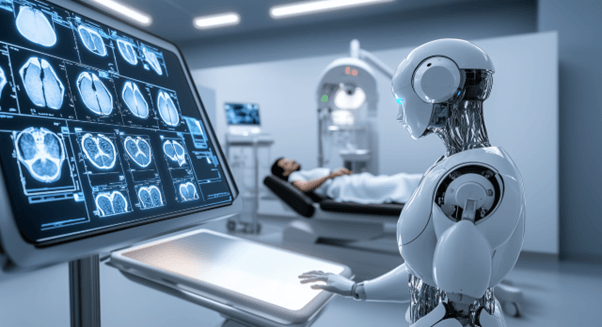
AI can:
Automate diagnostics
Enable telemedicine
Improve rural healthcare access
Prime Minister Narendra Modi has emphasized technology’s role in healthcare:
“Technology is the biggest enabler of affordable and accessible healthcare for every citizen.”
Education: Personalized Learning at Scale
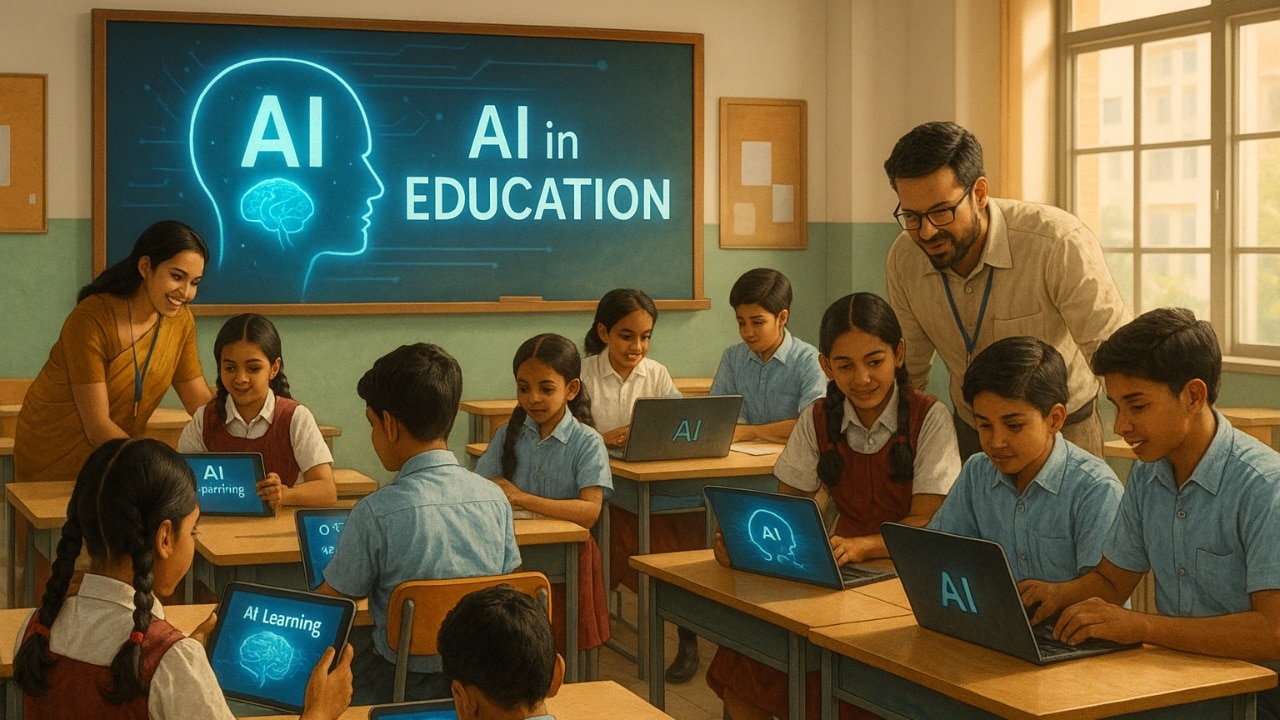
AI can:
Personalize education
Reduce dropout rates
Improve workforce readiness
BFSI: AI-Powered Financial Inclusion

AI-driven fintech will:
Improve credit access for MSMEs
Detect fraud
Personalize financial products
Finance Minister Nirmala Sitharaman has stated:
“Technology-driven financial inclusion is the foundation of India’s next phase of economic growth.”
Role of Government Institutions: Strengths and Limitations
Positive Contributions
Government has:
Built digital public infrastructure
Enabled startup growth
Promoted financial inclusion
Prime Minister Narendra Modi has often stressed:
“India’s digital revolution is powered by innovation, inclusion, and scale.”
Challenges
However:
Some policies move slowly
Deep-tech funding is limited
Coordination across ministries can improve
Key Government Initiatives Driving India’s AI Future
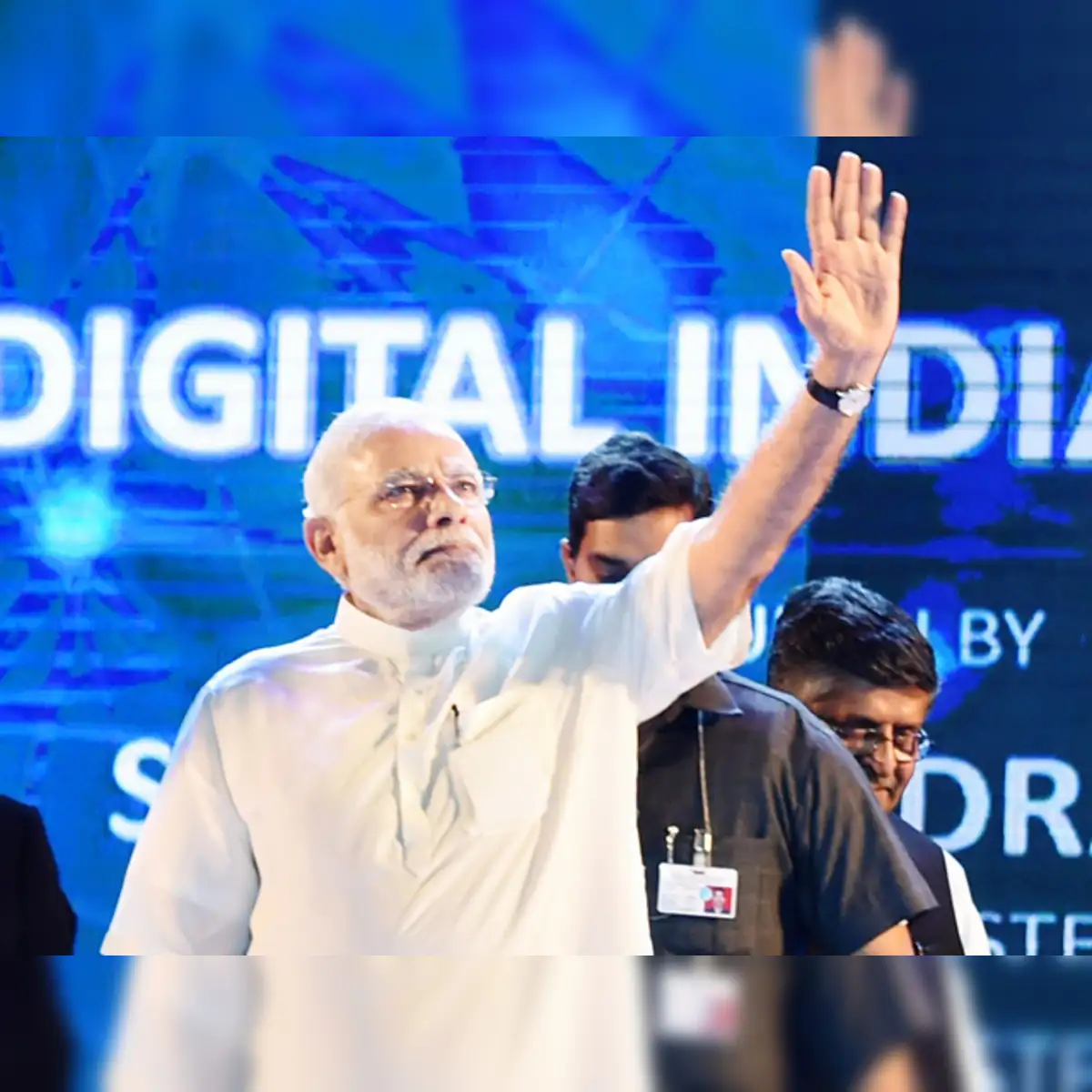
Major Programs
IndiaAI Mission
Digital India
Startup India
Semiconductor Mission
National Supercomputing Mission
Minister Ashwini Vaishnaw on AI policy direction:
“Our goal is to create an AI ecosystem that is inclusive, innovative, and globally competitive.”
Five-Year Outlook: India’s AI-Driven Global Role
If momentum continues, by 2031 India could become:
A global AI services hub
A digital infrastructure exporter
A smart manufacturing power
The world’s largest AI talent base
As Mukesh Ambani noted:
“India has the scale, talent, and entrepreneurial energy to become a global technology leader.”
Conclusion: India’s AI Moment
India enters the AI era with:
Massive talent
Scalable digital infrastructure
Strong startup ecosystem
Large domestic market
But success will depend on:
Sovereign AI infrastructure
Deep-tech research investment
Public–private collaboration
Prime Minister Narendra Modi summarized the national ambition:
“The world is looking at India as a technology powerhouse. Our youth and our innovation will define the future.”
For MSMEs, startups, and policymakers, the message is clear:
AI is not just a technological shift—it is India’s pathway to global digital leadership.