/smstreet/media/agency_attachments/3LWGA69AjH55EG7xRGSA.png)

 Follow Us
/smstreet/media/media_files/2026/02/21/indian-exports-us-tariffs-2026-02-21-13-28-10.png)
The global trade landscape has once again entered a phase of uncertainty following a landmark ruling by the Supreme Court of the United States striking down sweeping tariff measures, only to be followed by the Trump administration imposing a fresh 10% temporary import duty.
For Indian exporters, particularly MSMEs with strong exposure to the US market, this twin development represents both institutional relief and commercial uncertainty.
This exclusive SMEStreet report breaks down what the ruling means, how the new duty affects Indian businesses, and what exporters must do next.
The Legal Reset: What the Supreme Court’s Ruling Signals
The Supreme Court’s decision to invalidate broad tariff measures is widely seen as:
A reaffirmation of constitutional limits on executive trade powers
A signal that sweeping tariff escalations may face judicial scrutiny
A move toward restoring rules-based trade predictability
However, the administration’s swift move to impose a 10% temporary import duty indicates that tariffs remain a central instrument of US trade policy.
As Kaushal Sampat, Founder Rubix Data Sciences and President Vayana, stated:
“The US Supreme Court’s ruling has reset the legal foundation of tariff policy, but the immediate imposition of a fresh 10% duty makes it clear that tariffs remain central to America’s trade strategy. For India, this brings relief from extreme tariff escalation, but also confirms that exporters must prepare for continued policy-driven cost pressures.”
This quote encapsulates the dual reality facing Indian exporters — legal stability improving, but cost pressures persisting.
Why This Matters for Indian Exporters
For Indian businesses exporting to the US, the issue is not merely legal—it is commercial:
Pricing models are disrupted.
Long-term contracts face renegotiation pressures.
Buyer confidence may weaken temporarily.
Competitive dynamics shift rapidly.
Sector-Wise Impact on Indian Exporters
1. Engineering Goods & Auto Components
The US is a key market for Indian engineering exports. A 10% temporary duty can:
Reduce price competitiveness vis-à-vis Mexico and Vietnam.
Squeeze margins for MSME component manufacturers.
Trigger renegotiation of supply contracts.
Strategic Insight: Indian exporters must consider partial cost absorption strategies while negotiating long-term supply agreements.
2. Textiles & Apparel
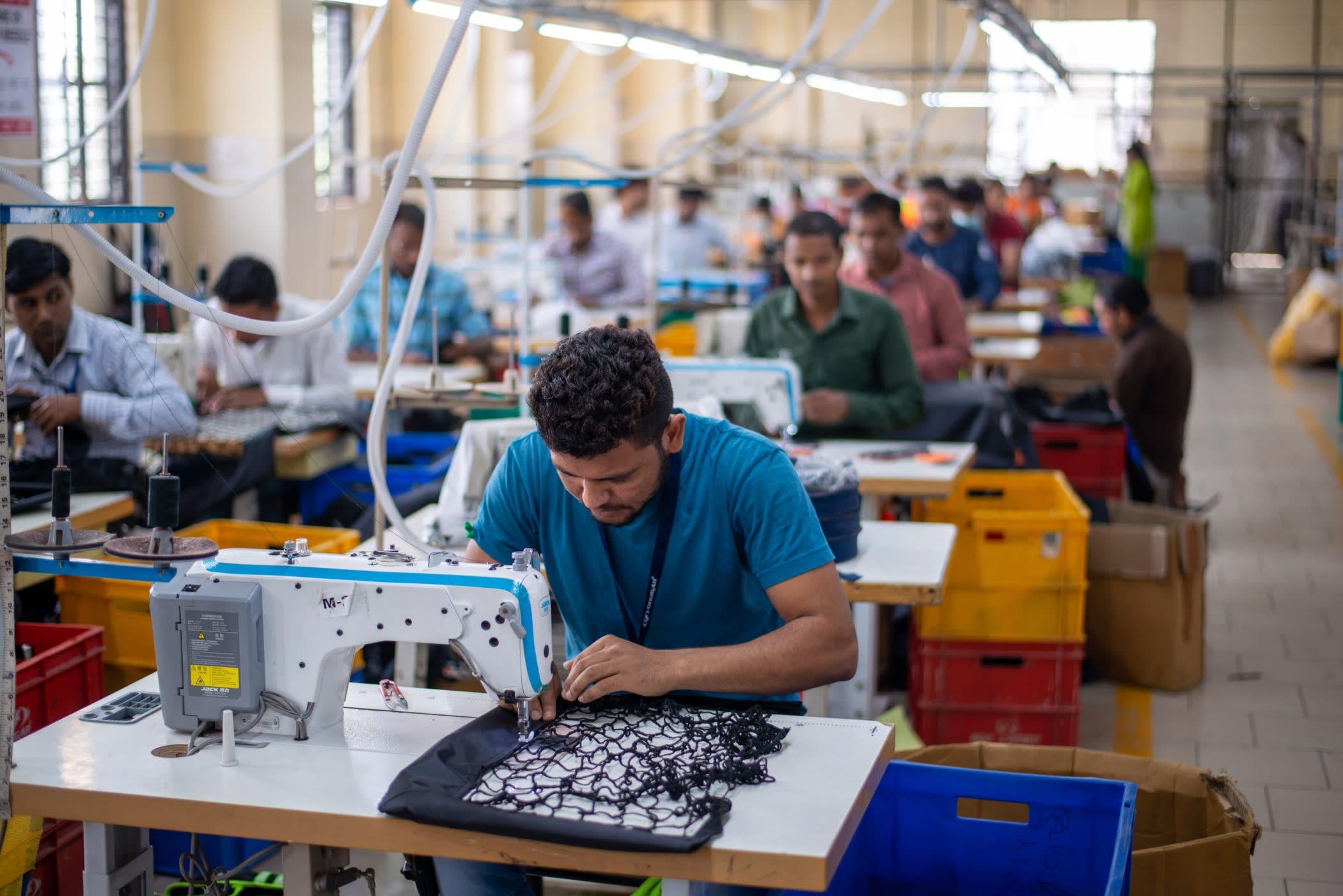 The textile sector, particularly MSME-driven clusters in Tiruppur, Surat, and Ludhiana, is highly sensitive to tariff shifts.
A 10% import duty directly affects price-sensitive retail contracts.
US retailers may temporarily shift sourcing.
Inventory cycles may lengthen.
Opportunity Window: If sweeping tariffs are permanently blocked by judicial oversight, long-term policy stability could return, benefitting compliant exporters.
3. Pharmaceuticals & Chemicals
India is a global supplier of generics to the US. While essential medicines often enjoy specific exemptions, uncertainty can:
Impact raw material flows.
Delay FDA-bound shipments.
Increase compliance documentation requirements.
Exporters must track product-specific tariff classification changes closely.
4. Electronics & IT Hardware

With India positioning itself as an alternative electronics manufacturing hub, the 10% temporary duty can:
Affect contract manufacturing margins.
Disrupt US-bound shipments under just-in-time supply models.
Alter global sourcing decisions by American tech firms.
However, long-term diversification away from China may still favour India structurally.
Macro-Level Implications for India-US Trade
The US remains among India’s top export destinations. Any tariff instability impacts:
Bilateral trade volumes
Export financing cycles
Currency volatility
Shipping and logistics planning
Possible Scenarios
Scenario 1: Temporary Duty Rolled Back Quickly
Minimal long-term damage. Indian exporters regain pricing stability.
Scenario 2: 10% Duty Extended
Exporters must restructure contracts and explore partial market diversification.
Scenario 3: Further Legal Challenges
Increased uncertainty but potential long-term structural stability if courts demand clearer tariff frameworks.
Strategic Recommendations for Indian Exporters
1. Recalibrate Pricing Models
Build tariff contingency clauses in contracts.
Negotiate shared duty burden with US buyers.
Use forward currency hedging to offset cost spikes.
2. Diversify Export Markets
While the US remains critical, exporters should:
Expand to EU and Middle East markets.
Explore Latin American trade corridors.
Leverage emerging FTAs.
Diversification reduces overdependence on a single regulatory regime.
3. Strengthen Compliance & Documentation
With judicial scrutiny rising in the US:
Ensure accurate HS code classification.
Maintain origin certification clarity.
Track real-time US Customs notifications.
4. Enhance Value Addition
Higher value-added products face relatively lower price sensitivity.
Move up the supply chain.
Invest in branding.
Reduce commodity-based export dependence.
5. Engage in Policy Advocacy
Indian industry bodies must:
Coordinate with the Government of India.
Engage through trade diplomacy channels.
Seek clarity on product-specific exemptions.
Active policy engagement can help mitigate damage.
The Silver Lining for Indian MSMEs
Faiz, for MSME-focused platforms like SMEStreet, this development reinforces a key lesson: global trade risk management is now a core business skill.
The judicial intervention in the US suggests that:
Arbitrary tariff escalations may face constitutional checks.
Long-term trade stability could improve.
Rules-based frameworks may eventually prevail.
For Indian MSMEs, this means preparing not just for disruption—but for structured global expansion.
What Should Exporters Do This Quarter?
Immediate Actions:
Review US exposure percentage.
Recalculate landed cost impact.
Communicate proactively with US buyers.
Reassess working capital requirements.
Strengthen export insurance coverage.
Medium-Term Actions:
Invest in digital trade intelligence tools.
Participate in export promotion councils.
Build direct-to-market US distribution partnerships.
A Defining Moment for Export Strategy
The striking down of sweeping tariffs by the US Supreme Court, followed by the imposition of a 10% temporary import duty, highlights a core reality of global trade in 2026:
Policy unpredictability is the new normal.
For Indian exporters—especially MSMEs—this is not merely a regulatory shift. It is a strategic wake-up call.
Those who:
Diversify smartly
Hedge risks effectively
Move up the value chain
Engage diplomatically
…will not only survive but emerge stronger in the evolving India-US trade corridor.
SMEStreet will continue to monitor developments closely and provide actionable insights for India’s export community.
Disclaimer: This article is for informational purposes only and does not constitute financial or legal advice. Exporters should consult trade experts, customs advisors, and legal professionals for product-specific guidance.